
Research quality guide
Peptide Stability Testing: What Researchers Should Check
A stability result is useful only when a researcher can see what was tested, under which conditions, for how long, and how the material was evaluated. This guide explains how to review that evidence without asking a single record to prove more than it can.
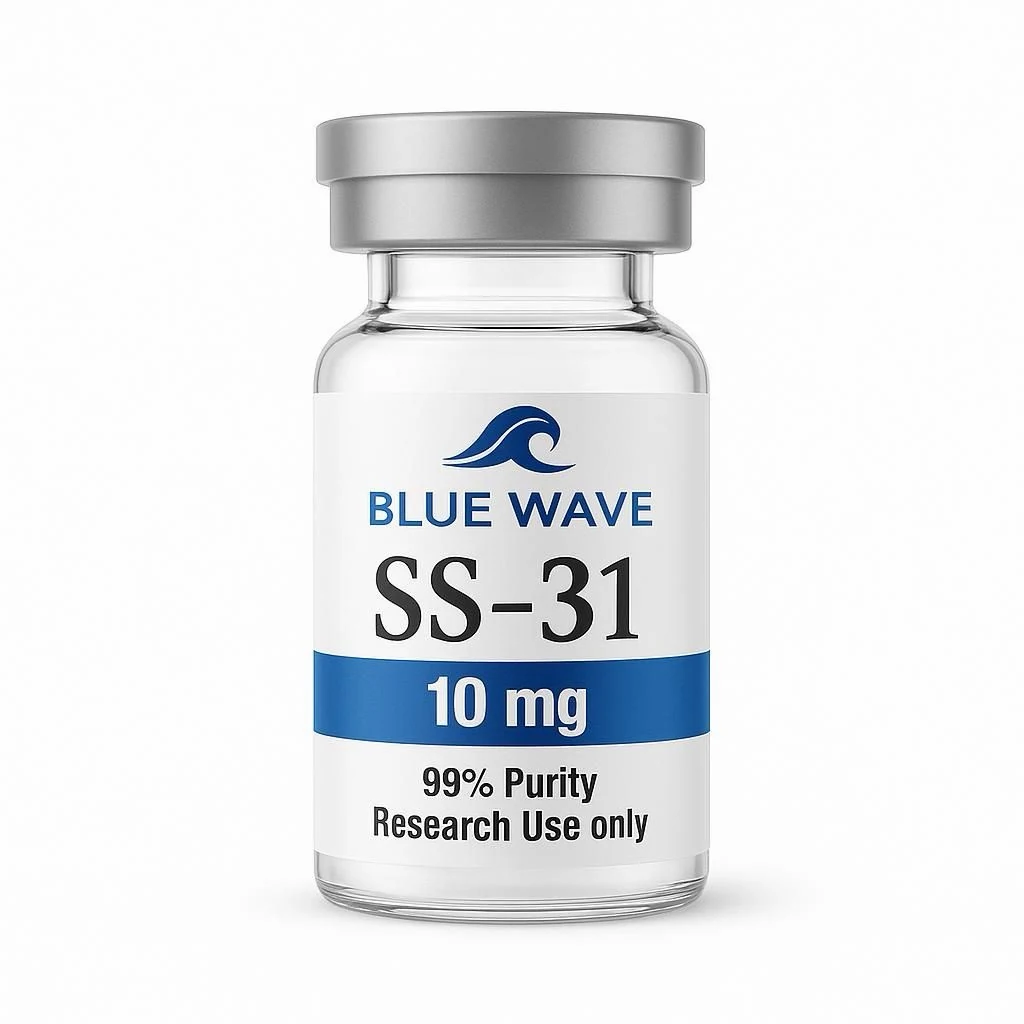
Peptide stability testing addresses a practical question that is easy to oversimplify: how does a defined material change over time when it is exposed to stated conditions? It is not a broad guarantee that a peptide will perform the same way in every study, under every storage practice, or after every handling step. Its value comes from the connection between a specific sample, a set of conditions, a time period, and an analytical result.
For a researcher comparing materials, stability evidence belongs alongside identity, purity, storage instructions, and batch traceability. Start by confirming that the record identifies the same material you are considering. Then review the conditions and timepoints before looking at the conclusion. Blue Wave’s lab reports library and compound catalog provide the product and available-record context needed for that first check.
What peptide stability testing is designed to answer
Stability testing observes whether a material remains within a stated expectation over time under defined conditions. In formal pharmaceutical development, the ICH Q1A(R2) stability guideline describes stability data as support for a retest period, shelf life, and recommended storage conditions. That framework is useful context for reading a record, even though the documentation needed for a research-use material may differ from a finished drug product.
For peptides, changes can arise through more than one pathway. A recent peer-reviewed review of peptide stability discusses chemical and enzymatic degradation routes, including hydrolysis, oxidation, and deamidation, and why the observed result depends on the material and environment being studied. The review’s overview of peptide stability mechanisms is useful background, but it should not be used to infer the condition of a specific vial without a record for that material.
A practical stability record should therefore answer a limited set of clear questions. Which material was tested? Which batch or sample was used? What condition was applied? When was it tested? Which analytical method was used to look for change? What result was reported? When those anchors are present, the reader can understand the scope of the result. When they are absent, the conclusion is harder to apply responsibly.
Begin by matching the material and batch
Before interpreting a storage claim or a stability conclusion, confirm that the record identifies the material precisely. The product name should distinguish the peptide from similar compounds, salts, blends, or formats. The lot or batch reference should agree with the vial, packaging, purchase record, or supplier documentation available to you. The report should also name its issuer and show a test or report date.
This is the same discipline that matters when reviewing a peptide certificate of analysis. A document may show that a supplier uses a certain testing format, but an example or a record for another batch is not batch-specific evidence for the material in front of you. If the identifiers do not line up, ask which sample was tested before relying on the result.
Batch matching also keeps the intended use of the information clear. Blue Wave materials are supplied for laboratory, research, and analytical purposes only. A stability record may help researchers assess the available evidence for a research material. It is not a substitute for a protocol-specific handling plan, clinical guidance, dosing information, or a claim about human or veterinary use.
Read the condition before the conclusion
A stability statement without a condition is incomplete. Temperature, light exposure, humidity, container closure, sample format, concentration, solvent system, and handling can all affect how a result should be understood. A report does not need to answer every possible question to be useful, but it should make the studied conditions clear enough that a reader is not forced to guess.

There is an important difference between a sample held under a stated refrigerated condition, a sample subjected to a short handling interval, and a sample deliberately stressed with light or elevated temperature. Those results may each be useful, but they answer different questions. A short stress study can reveal a potential vulnerability. It does not automatically establish routine-storage performance. Conversely, a general storage instruction does not show what a particular analytical method observed over time.
When the record refers to a solution, read the format carefully. A result for a dry material should not be assumed to describe a prepared solution, and a result for one concentration or solvent should not automatically be applied to another. The product detail and any available record need to be read together. Blue Wave’s research peptide supplier guide offers a useful framework for comparing how clearly a supplier presents material details and supporting documentation.
Look for timepoints that make the result meaningful
Time is part of the claim. A stability record should show when the sample was assessed or how long it was held before analysis. That might mean an initial measurement compared with later timepoints, or it may be a concise statement tied to a specified interval. Without a duration, it is difficult to know whether the result describes initial condition, short-term handling, or a longer storage period.
Review the timepoints in relation to the stated purpose. A record intended to explore a brief bench-top interval may reasonably use a shorter period than one intended to support a longer storage claim. The key is not that every study follows one universal schedule. The key is that the schedule is visible and matches the question the record is meant to answer.
Researchers should be cautious with open-ended wording such as “stable” when the associated duration is not present. It is more useful to see a result framed as evidence under named conditions through a stated point in time. That language preserves the distinction between what was observed and what remains untested. It also makes it easier to compare records from different materials without treating them as interchangeable.
Check what the analytical method measured
Stability is not something that can be inferred from a label alone. It needs an analytical approach that can detect the kind of change the study is looking for. High-performance liquid chromatography, often called HPLC, is commonly used to separate detectable components and observe changes in a sample profile. Depending on the study, other techniques may support identity, content, or related measurements. The method needs to be read in light of its stated purpose.

This is where the distinction between peptide purity testing and stability testing matters. A purity result describes the tested sample under a defined analytical method. A stability study asks whether a relevant result changes across stated conditions or timepoints. The same general instrument family may appear in both contexts, but the question being asked and the study design are not the same.
Identity evidence also remains its own question. A peptide may need separate confirmation that the tested sample is consistent with the named material. Blue Wave’s peptide identity testing guide explains how to review that evidence alongside purity and traceability. A result is stronger when the material, method, and reported conclusion all point to the same defined sample.
The FDA’s guidance on analytical procedures and method validation reinforces a simple reading habit: a method should be interpreted in relation to its intended use. A clean chromatogram or a passing result can be helpful, but it should not be stretched into evidence for every possible degradation pathway, storage setting, or future experiment.
Separate stability from purity, amount, and suitability
Stability, purity, identity, and amount are related but different questions. A material can have a high reported purity at one timepoint without a study showing how that profile changes over time. A stability record can describe a trend under certain conditions without establishing the exact fill quantity in a vial. Neither result establishes that a material will fit a particular protocol.
Keeping these questions separate prevents a common mistake: allowing one favorable result to become a complete quality claim. Read the product description for the listed format and size, use available laboratory documentation to understand the analytical evidence, and retain the details that connect the record to the batch. When the work requires a clarification, ask a focused question rather than trying to infer missing context from a percentage or a storage phrase.
This is especially important for blends and prepared solutions. A result for a finished blend may not describe each component independently. A result for one presentation may not apply to another. The record should identify the sample clearly enough to show what was actually tested. If it does not, the appropriate response is to pause and request clarification before treating the result as support for a different material.
Keep a record that stays useful after receipt
A stability review has more value when the information can be located later. Keep the product record, batch reference, available report, storage information, and any supplier correspondence together. The goal is not unnecessary paperwork. It is a clear answer to a basic laboratory question: which material was reviewed, what evidence was available, and which conditions did that evidence cover?

Recordkeeping also helps separate the supplier’s documentation from a researcher’s own handling decisions. A supplier record may describe the material before shipment or under specified testing conditions. Once a research team receives a material, its own storage, preparation, protocol, and controls become part of the study context. The two sets of information work together, but they are not interchangeable.
The FDA’s data integrity guidance emphasizes complete and attributable information as a foundation for reliable decisions. For an initial material review, a straightforward file containing the product, batch, analytical record, and follow-up answers can be enough to preserve that connection without turning the process into an administrative burden.
A practical peptide stability testing checklist
- Match the material. Confirm the product name, format, and lot or batch identifier correspond to the sample and record under review.
- Identify the condition. Look for the stated storage or stress condition, including the factors that materially affect the result.
- Find the timepoints. Check when the sample was evaluated and how long the stated condition applied.
- Read the method. Confirm that the record identifies the analytical approach used to look for change.
- Keep the question narrow. Treat the result as evidence for the specific condition and period studied, not a universal guarantee.
- Review identity and purity separately. Use distinct records or stated results for those different analytical questions.
- Record open questions. Ask for clarification when the sample, conditions, timing, or method cannot be connected clearly.
This checklist is a disciplined first review, not a replacement for a laboratory quality system or study-specific controls. It helps researchers understand the evidence that is present, identify what the result actually covers, and avoid over-interpreting a brief claim.
How Blue Wave supports a clearer material review
Blue Wave Compounds keeps product details and available documentation close to the point of evaluation. Researchers can browse the compound catalog, locate available lab reports, review the site’s research-use guidance, and use the contact page when a product record needs clarification.
That approach gives researchers a clear path to inspect what is available before an order. It does not overstate what one report can prove. A useful material review connects the listed product, available analytical record, stated conditions, and batch information before the material becomes part of laboratory work.
Frequently asked questions
What is peptide stability testing?
Peptide stability testing evaluates whether a defined sample changes over a stated period under stated conditions. A useful result identifies the material, conditions, timepoints, analytical method, and reported outcome so a researcher can understand what was actually assessed.
Does a peptide COA prove long-term stability?
Usually no. A certificate of analysis can document identity or purity testing for a defined sample, but it does not automatically establish how that material will change over time. Stability support requires its own conditions, timepoints, and analytical context.
What conditions should appear in a stability record?
The record should identify the storage environment or stress condition, the duration or timepoints, the sample or batch, the analytical method, and the observed result or acceptance criteria. Missing conditions make it difficult to apply the result to a different material or setting.
Can a stability result be applied to a different peptide batch?
Not automatically. A stability result is strongest when it can be tied to the same material and batch under review. A result for a different batch, concentration, formulation, or storage condition may still provide context, but it should not be treated as equivalent evidence.
Related posts
Continue your documentation review.

Research quality
How to Read a Peptide COA: A Researcher's Guide
A practical guide to checking identity, purity, batch traceability, and the limits of a peptide certificate of analysis.
Read the guide →
Research quality
Peptide Purity Testing: What Researchers Should Check
A practical guide to peptide purity testing, identity checks, batch matching, and the questions a report should answer.
Read the guide →
Research quality
Peptide Identity Testing: How to Review the Evidence
A practical guide to peptide identity testing, mass spectrometry records, batch matching, and useful follow-up questions.
Read the guide →