
Research quality guide
Lyophilized Peptide Storage: A Research Guide
Good storage practice starts with a simple premise: the record, container, environment, and material must stay connected. This guide explains how to review lyophilized peptide storage without turning a general rule into a claim about every sequence.
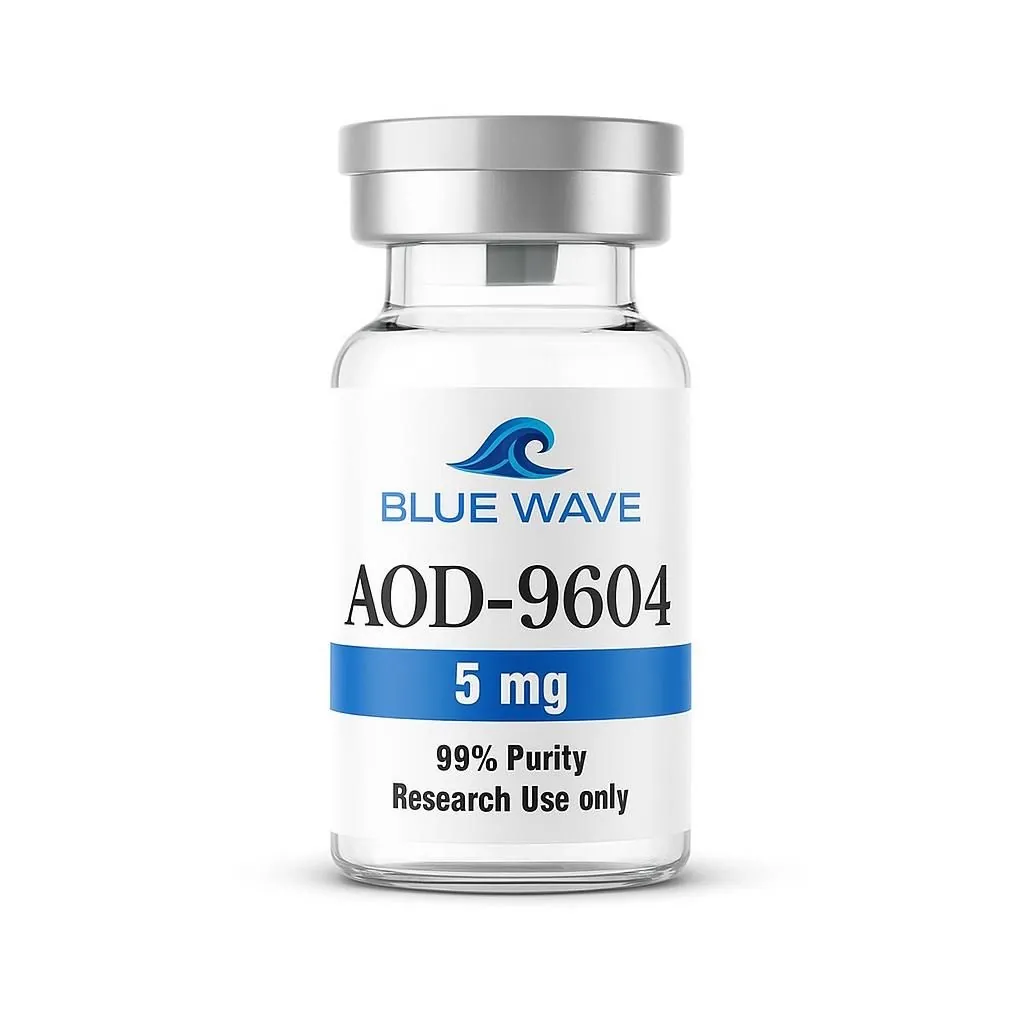
Lyophilized material is commonly supplied as a dry cake or powder because removing water can reduce some routes of degradation. That does not make storage a set-and-forget step. A research team still needs a clear chain from the received vial to the batch record, the documented storage requirement, and the conditions the vial actually experienced. The goal is not to promise that a material will perform in every experiment. It is to preserve the information a laboratory needs to make a careful, defensible decision.
For an initial review, begin with the material as supplied. Confirm the product name and lot or batch identifier, retain the available analytical record, inspect the package condition, and document where the vial is placed. Blue Wave materials are for laboratory and analytical research use only. Storage guidance supports a research-material review. It is not medical advice, dosing guidance, or evidence of suitability for human or veterinary use.
Why the dry state matters
Water can enable hydrolysis and can change the physical behavior of a peptide. That is why dry, sealed, temperature-controlled storage is often preferred for longer holding periods. The useful distinction is not simply powder versus liquid. It is whether the material remains in the documented state, protected from unnecessary moisture, heat, light, and repeated handling. A vial that has been opened, moved between conditions, or separated from its records deserves a more careful review than an intact, traceable vial.
The scientific literature and manufacturer guidance agree on the broad principle that long-term storage of peptide material is often more robust in a lyophilized state than in solution, while the exact conditions remain material-dependent. A peer-reviewed set of recommendations for peptide assay materials notes that long-term storage is most effective when peptides are lyophilized and held at cold temperatures. Sigma-Aldrich's handling guidance likewise emphasizes keeping material tightly closed, away from bright light, and protected from moisture. Neither source replaces the instructions attached to an exact product or batch, but each explains why the receiving record matters.
Read the product record before choosing a location
A storage temperature written in a generic article is not a substitute for the supplier's documentation. Start with the product page, certificate of analysis, accompanying record, or a direct clarification from the supplier. Check whether the instruction applies to the supplied dry material, a prepared solution, or a defined short-term handling period. Those are different states, and collapsing them into one rule is how otherwise careful records become hard to interpret.
Temperature is only one part of the instruction. Note the specified storage range, whether light protection is mentioned, whether the vial should remain sealed, and whether the record identifies an expiry or retest date. If the documentation is silent on a condition that matters to the planned work, record that gap and ask a focused question before treating an assumption as a fact. Blue Wave's lab reports library provides a practical place to look for available product records.
Keep moisture outside the vial
Moisture control is often the overlooked part of cold storage. A sealed cold vial can accumulate condensation when it is opened before it has equilibrated with the surrounding room. Thermo Fisher's handling instructions therefore recommend allowing a lyophilized vial to warm before dissolving it, and Sigma-Aldrich makes the same point for reducing uptake of ambient moisture. The operational lesson is modest but useful: do not use a cold-storage shelf as the place to open, inspect, and decide what comes next.
Instead, plan the handling sequence. Retrieve only the material needed, keep the container closed until it has reached the appropriate handling condition, and avoid leaving the vial exposed while unrelated work continues. If a vial must be accessed repeatedly, the research team should use a documented approach appropriate to its own protocol. The article cannot prescribe that protocol. It can make the control points visible: seal integrity, exposure time, environment, and a record of what happened.
Transport history belongs in the same review. A parcel can experience conditions that differ from the final storage location, and a brief interruption is not automatically proof of damage. Record what is known, including delivery date, package condition, and any stated handling information. If there is evidence of a compromised container or an unexplained condition excursion, pause the material's use and seek the supplier's guidance. That is more reliable than trying to infer material quality from appearance alone.
It is also helpful to distinguish physical protection from analytical confirmation. A tidy vial in a cold location may suggest that the basic storage process was followed, but it cannot independently verify identity, purity, amount, or stability. Those claims need their own methods and records. Conversely, a documented storage history does not make a certificate of analysis unnecessary. Each document answers a different question, and the decision becomes more reliable when a laboratory does not ask one piece of evidence to do every job.
Light, oxygen, and sequence-specific sensitivity
Different peptide sequences do not have identical stability profiles. Published supplier guidance highlights that some amino-acid residues may be more susceptible to oxidation or other changes, and that light exposure can matter for certain materials. That is a reason to avoid blanket claims such as "all peptides are stable for years." It is also a reason to retain the product-specific record rather than relying on a label copied into a generic inventory spreadsheet.
Where a supplier identifies light protection, an inert atmosphere, or another storage precaution, make that instruction part of the material's receiving record. When it does not, do not invent a specification. The better response is to maintain sensible physical protection, preserve the documentation available, and ask for clarification if the study's design requires more certainty. Blue Wave's peptide stability testing guide explains why a stability statement is always tied to defined conditions and observation points.
Sequence awareness is especially useful when evaluating a general storage statement. A material's composition, modification, salt form, concentration, and container can all affect what a particular study needs to control. The practical response is not to become a specialist in every degradation pathway before receiving material. It is to avoid over-reading a generic storage label, retain the relevant documentation, and make the next question specific. For example, ask whether a stated condition applies to the supplied dry material, a prepared stock, or a defined period after opening.
Separate receipt, storage, and use records
A useful storage record answers ordinary questions quickly. What arrived? Which lot was it? Was the container intact? Where was it placed? Which documentation was reviewed? Who moved it, and when? This is not paperwork for its own sake. It gives a laboratory a way to tell whether a question concerns the material, a condition, or a gap in the history. It also keeps a later review from depending on memory after multiple people have handled an item.
Keep the entries proportional to the work. For a basic receiving workflow, the product name, lot or batch identifier, date received, condition, storage location, and record link may be enough. More formal projects can require additional controls. The key is consistency. A clean connection between the vial label, purchase record, analytical documentation, and storage log is more valuable than a long note that does not identify the actual material.
When a laboratory changes a storage location, treat that move as part of the material history. Update the location record at the time of the move rather than reconstructing it later. If a freezer is shared across projects, a simple location convention and an associated batch record can prevent a misplaced vial from becoming an untraceable one. The same principle applies to returned stock: record the event and the condition rather than assuming it can be inferred from a label alone.
Batch matching is the thread that holds this process together. A product name alone may not be enough when an organization receives multiple lots over time. The label, supporting analytical document, storage log, and any communication about a question should use the same lot or batch reference where available. If a record cannot be connected to the actual vial, treat it as a gap to resolve, not as interchangeable evidence. This simple habit makes a future investigation shorter and gives the laboratory a more reliable basis for deciding whether material can move into the next stage of its own work.
Storage review also benefits from a clear boundary between what is known and what is assumed. Known facts come from the received label, the accompanying documentation, the observed package condition, and a contemporaneous handling record. Assumptions often enter when a team copies a standard note from one material to another, relies on an old example certificate, or treats a recommended condition as proof that every storage event was acceptable. Marking that boundary makes follow-up more efficient. It lets a researcher ask for the missing fact, compare the right document, or decide that the available evidence is not enough for the intended work. In quality-sensitive research, that restraint is a strength, not a delay.
Finally, review the storage instruction whenever the material state changes. A note that applies to a sealed dry vial may not answer a question about a prepared solution, a working dilution, or material transferred into another container. Record the transition, retain the relevant source instruction, and let the laboratory's own approved methods govern the next step.
A practical storage-review checklist
- Match the material. Confirm the product name and lot or batch identifier against the received vial and supporting record.
- Inspect before storing. Note a compromised seal, damaged container, or an observation that needs clarification.
- Read the actual instruction. Use the product-specific storage guidance rather than a generic temperature claim.
- Protect the dry state. Keep the vial sealed and minimize unnecessary moisture, light, and handling exposure.
- Record the location. Document where the material is stored and make location changes traceable.
- Keep evidence together. Retain the available certificate, product record, and receiving history with the same identifier.
- Ask before assuming. When a detail is missing or conflicts with the work planned, request clarification before treating a general rule as a product fact.
How Blue Wave supports a documentation-first review
Blue Wave makes it easier to begin with product-level information rather than an unsupported assumption. Researchers can browse the compound catalog, review available information in the lab reports library, and compare the material record before selecting a research compound. For a question about an available record, product detail, or order, the contact page offers a direct route to the team.
That does not turn a general storage guide into a blanket guarantee. It gives researchers a clearer way to connect the product, record, and question before the material enters a study. For related material-review questions, see the peptide solubility guide and the peptide stability testing guide.
Frequently asked questions
What does lyophilized mean?
Lyophilized means the material was freeze-dried to remove water. It describes the physical state of a supplied research material, not a guarantee of stability under every storage condition or a substitute for product-specific documentation.
Should every lyophilized peptide be stored the same way?
No. Temperature, container, light exposure, sequence, formulation, and the supplier's documented instructions can matter. Use general handling guidance as a review framework, then follow the records supplied for the exact material and batch.
Why let a cold vial equilibrate before opening it?
Opening a cold vial can allow moisture from the surrounding air to condense on the material. Letting a sealed vial reach room temperature before opening helps reduce that moisture exposure.
What should a laboratory record at receipt?
A useful receiving record connects the product name, lot or batch identifier, delivery date, observed package condition, storage location, and the certificate or other documentation reviewed. This keeps later questions tied to a specific material.
Related posts
Continue your documentation review.

Research quality
How to Read a Peptide COA: A Researcher's Guide
A practical guide to checking identity, purity, batch traceability, and the limits of a peptide certificate of analysis.
Read the guide →
Research quality
Peptide Purity Testing: What Researchers Should Check
A practical guide to peptide purity testing, identity checks, batch matching, and the questions a report should answer.
Read the guide →