Mini Cart
Loading cart...
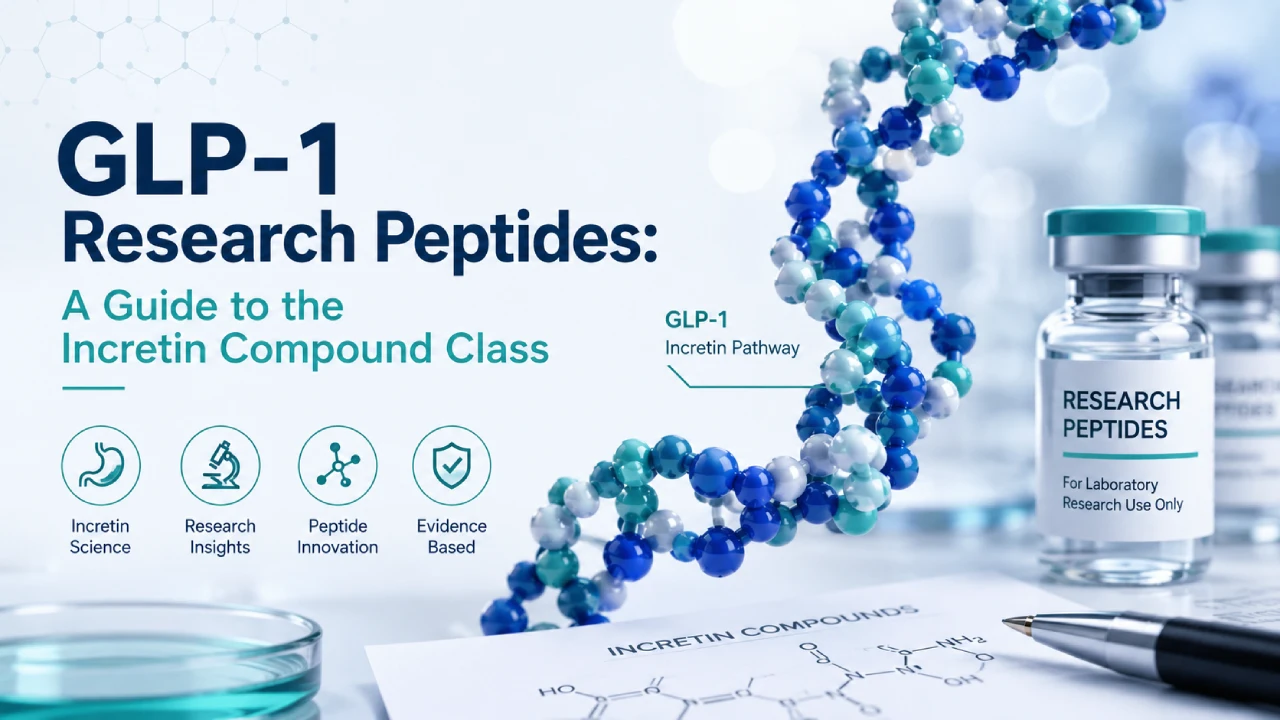
Glucagon-like peptide-1 (GLP-1) has become one of the most studied targets in metabolic research over the past decade. As interest in incretin biology has grown, so has demand for GLP-1 research peptides — compounds used by laboratories and qualified researchers to study appetite regulation, glucose metabolism, and related physiological pathways. This guide breaks down what the GLP-1 research peptide class is, why it's drawing so much scientific attention, and what to look for in a research-grade GLP-1 compound source.
This article is intended for laboratory, institutional, and qualified research audiences. All compounds discussed are sold strictly for research use only and are not approved for human or animal use, consumption, or clinical application.
GLP-1 is a naturally occurring incretin hormone produced in the intestine in response to food intake. In published research, it has been shown to play a role in:
Because of this multi-pathway involvement in glucose and energy homeostasis, GLP-1 and GLP-1-related compounds have become a central focus of metabolic and endocrine research programs.
The research literature on incretin-pathway compounds has expanded rapidly, and with it, interest in GLP-1 research compounds used to model these pathways in vitro and in preclinical research settings. A few factors are driving this:
Suppliers commonly group several related compounds under this category, including:
Each of these serves a distinct role in a research protocol, so it's worth understanding which pathway a given compound targets before selecting one for a study.
Because GLP-1-class compounds are structurally complex, sourcing quality matters. When evaluating a supplier, researchers should generally check for:
A supplier that can't produce recent, batch-specific COAs on request is a red flag regardless of price.
Impurities or degradation products in a research compound can directly confound study results. This is especially true for larger, more complex peptides like those in the GLP-1 class, where synthesis errors are more likely to occur. Third-party mass spectrometry and HPLC testing — rather than in-house-only verification — is the standard researchers should expect from any credible supplier before incorporating a compound into a study design.
GLP-1 research peptides are often studied alongside — or compared against — compounds in adjacent research categories, including non-GLP-1 metabolic research peptides and energy-pathway compounds. Researchers building out a broader metabolic research protocol may want to review these related categories as well:
Are GLP-1 research peptides approved for human use?
No. GLP-1 research peptides sold for laboratory use are not approved for human or animal consumption. They are intended strictly for in vitro or preclinical research by qualified professionals.
How is purity verified?
Reputable suppliers provide third-party Certificates of Analysis, typically generated via HPLC and/or mass spectrometry, for each product batch.
What's the difference between GLP-1 and non-GLP-1 metabolic research peptides?
GLP-1-class compounds act on the incretin signaling pathway specifically, while non-GLP-1 metabolic research peptides target other mechanisms related to fat metabolism and energy balance. Researchers sometimes study both classes to compare pathway-specific effects.
The GLP-1 research peptide category continues to expand alongside a growing body of published literature on incretin biology. For researchers, the priority isn't just finding a compound — it's finding a verified, third-party tested source that supports valid, reproducible results. Reviewing COAs, purity data, and supplier documentation before every purchase remains the best safeguard for research integrity.
Blue Wave Compounds supplies third-party tested GLP-1 research peptides at 99%+ purity for qualified researchers and laboratories. All products are Research Use Only and are not for human consumption.