Mini Cart
Loading cart...
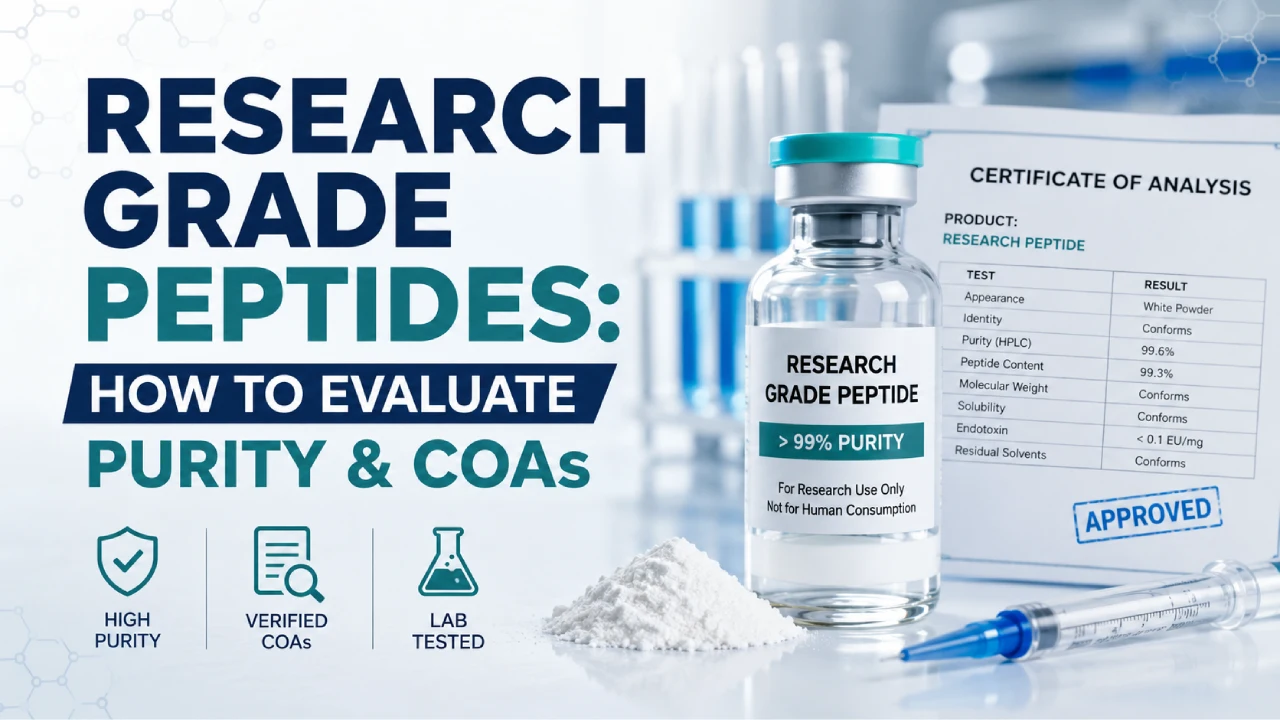
Not all peptides sold for laboratory use are created equal. The term research grade peptides gets used loosely across the industry, but the actual purity, synthesis quality, and documentation behind a compound can vary widely from one supplier to the next — and that variation can directly affect research outcomes. This guide walks through what "research grade" should actually mean, how to read a Certificate of Analysis, and what red flags to watch for when evaluating a supplier.
This article is intended for laboratory, institutional, and qualified research audiences. All compounds referenced are sold strictly for research use only and are not approved for human or animal use, consumption, or clinical application.
In practice, "research grade" is not a legally standardized term, which is exactly why it matters to look past the label. At minimum, a genuinely research-grade peptide should offer:
A supplier browsing the full research peptide catalog should be able to produce this documentation for every listed product, on request, without delay.
A Certificate of Analysis is the primary document researchers should review before trusting a compound. A complete COA typically includes:
If a COA is missing any of these elements, or if the same COA is reused across multiple, differently dated batches, that's a signal to ask more questions before using the compound in a study.
In-house testing isn't inherently untrustworthy, but it removes the independent verification step that protects both the supplier and the researcher. Third-party testing matters because:
This is especially important for structurally complex compounds — such as those in the GLP-1 research peptide category or larger repair-focused peptides like those found under injury recovery research peptides — where synthesis errors are more likely and harder to detect without proper analytical testing.
Beyond the COA itself, a handful of supplier behaviors are worth watching for:
Suppliers that meet this bar consistently — across their entire catalog, not just a few flagship products — are generally the safer long-term choice for ongoing research programs.
What's the difference between "research grade" and "pharmaceutical grade"?
Pharmaceutical grade refers to compounds manufactured and regulated for human clinical use. Research grade peptides are manufactured for laboratory and preclinical research only and are not approved for human or animal consumption.
How often should a COA be updated?
Ideally, a new COA should accompany every batch. Reusing a single COA across multiple production runs is a sign the testing may not reflect the specific product actually shipped.
Can I request a COA if one isn't listed on the product page?
Yes — reputable suppliers should be willing to provide batch-specific documentation on request. If a supplier can't or won't, that's worth factoring into your sourcing decision.
"Research grade" is only as meaningful as the documentation behind it. Before incorporating any compound into a study, take the time to review the COA, confirm third-party testing, and verify the supplier's Research Use Only compliance. This small amount of diligence upfront protects both the integrity of the research and the reliability of the results.
Blue Wave Compounds provides third-party Certificates of Analysis for every research peptide in its catalog. Learn more about our quality process, or contact us with questions about a specific batch or compound.