Mini Cart
Loading cart...
Scientific research depends on accuracy, consistency, and reliable materials. When laboratories investigate peptides, biochemical compounds, metabolic pathways, cellular processes, or other areas of experimental science, the quality and documentation of research materials can become an important part of the overall research process.
With many suppliers now offering peptides and laboratory compounds online, researchers need to look beyond product availability and price. A dependable research peptides supplier should provide clear product information, appropriate quality documentation, transparent research-use policies, and a catalog that makes it easy to identify materials relevant to specific research areas.
This guide explores the key factors researchers should consider when evaluating a research compound supplier and explains why documentation, testing, product information, and responsible research-use labeling matter.
Choosing a research supplier is not simply about finding a particular compound in stock. Researchers should consider whether the supplier provides enough information to evaluate the material before purchasing it.
Important factors include product identification, specifications, available quantities, storage information, quality documentation, certificates of analysis, and intended-use statements.
A well-organized supplier can also make research planning easier by grouping materials into categories. For example, researchers may be looking specifically for energy research peptides, cognitive research materials, metabolic compounds, or peptides associated with muscle and growth-factor research.
This type of organization helps laboratories quickly narrow their search according to the scientific area they are investigating.
Documentation is one of the most important considerations when comparing research materials.
Researchers need to understand what they are purchasing and how the supplier characterizes the material. Depending on the compound, useful information may include its name, molecular information, quantity, physical form, purity information, storage recommendations, and analytical testing data.
Rather than relying exclusively on promotional descriptions, researchers should look for suppliers that make supporting information accessible.
For additional chemical information, researchers can also consult PubChem's chemical information database, a National Institutes of Health resource containing information about chemical structures, identifiers, physical and chemical properties, biological activities, safety information, literature, and other scientific data.
Using independent scientific resources alongside supplier documentation can help researchers perform more informed background research.
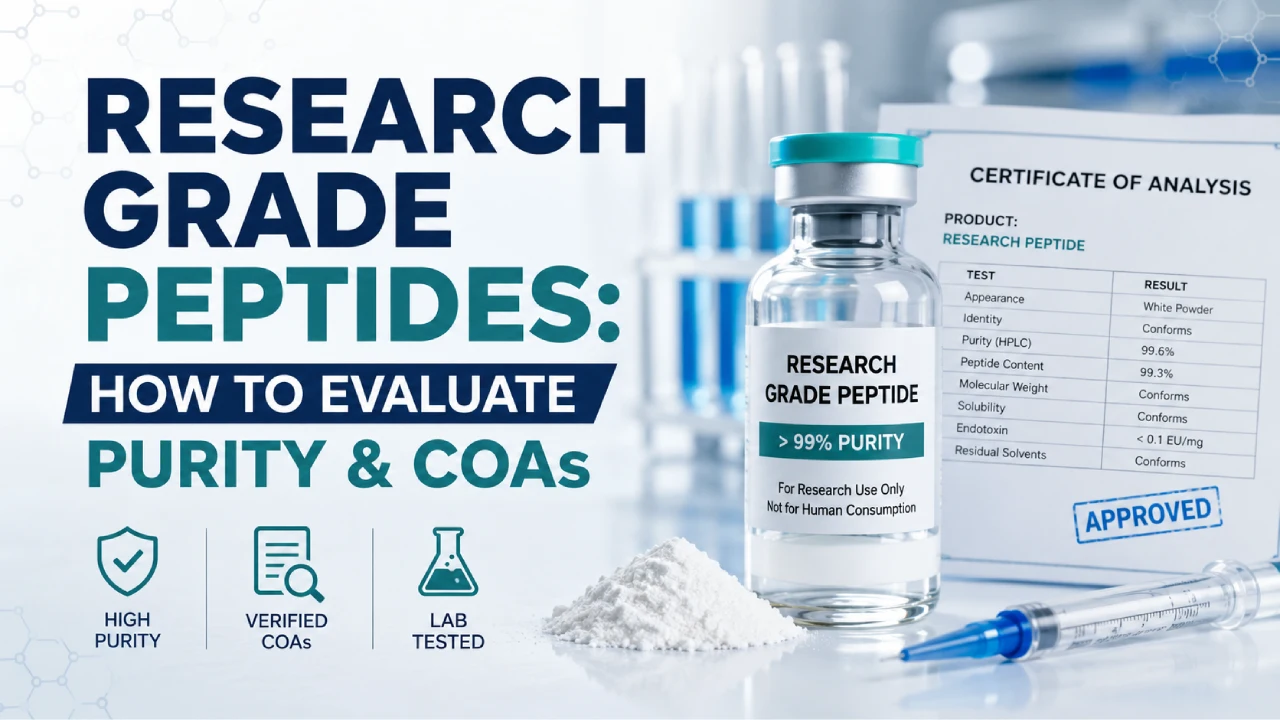
A Certificate of Analysis, commonly called a COA, can provide useful batch-specific information about a research material.
Depending on the compound and analytical process, a COA may contain information relating to identity, purity, testing methodology, and other analytical characteristics. Researchers should review the documentation available for the particular material rather than assuming that every product or batch has identical characteristics.
This is especially important for laboratories that require consistent documentation as part of their internal research workflows.
Blue Wave Compounds provides research materials with product information and, for applicable products, access to Certificates of Analysis for research compounds.
A transparent approach to documentation can give qualified researchers additional information when evaluating materials for laboratory and analytical applications.
Research-use-only labeling is another important consideration when evaluating research products.
Research materials should not automatically be treated as approved medications, therapies, or diagnostic products. Their intended use and regulatory status need to be clearly understood before they are purchased or used.
The U.S. Food and Drug Administration provides information about Research Use Only and Investigational Use Only products and explains the distinction between products intended for laboratory research and products intended for clinical diagnostic use.
For this reason, researchers should pay close attention to supplier labeling and intended-use statements.
Blue Wave Compounds identifies its products as being sold for research, laboratory, or analytical purposes and states that its products are not intended for human consumption.
Clear labeling helps keep research materials within their intended scientific context.
Peptides can be investigated across many areas of biology and biochemical research. Different laboratories may have very different objectives, which makes a broad and well-organized research catalog useful.
Some commonly encountered research categories include cognitive research, metabolic research, mitochondrial research, muscle-related research, anti-aging research, and hormonal signaling research.
Cognitive and neurobiological research involves complex pathways associated with cellular communication, signaling, neurological processes, and brain function.
Researchers working in these areas may investigate different peptide pathways and biochemical mechanisms using laboratory models.
When evaluating a cognitive research peptides category, researchers should focus on product identity, available documentation, intended research applications, and relevant scientific literature rather than relying on unsupported claims.
Scientific literature databases such as PubMed's biomedical research database can also help researchers locate peer-reviewed studies and reviews relating to peptide biology and other scientific subjects.
Cellular energy and mitochondrial biology are important areas of modern laboratory research.
Mitochondria are involved in cellular energy production and numerous biological processes, making mitochondrial pathways relevant to research across multiple disciplines.
Researchers investigating these mechanisms may be interested in mitochondrial research peptides and related compounds for controlled laboratory studies.
For example, Blue Wave Compounds lists SS-31 within its Energy Peptides category. Its product information describes SS-31 as a mitochondria-targeting research peptide and states that it is intended for in-vitro laboratory research and biochemical experimentation.
The scientific relevance of a compound should always be assessed through appropriate research literature and laboratory protocols rather than through marketing claims alone.
Muscle biology and growth-factor signaling represent another area where researchers may investigate peptide-related pathways.
Laboratories studying cellular signaling, growth factors, muscle biology, or related mechanisms may require access to specific research materials depending on the experimental model.
A dedicated muscle building research peptides category can make it easier for researchers to identify products relevant to this field.
As with other research materials, product information should be considered alongside scientific literature, laboratory protocols, analytical documentation, and applicable institutional requirements.
Metabolic research has become an increasingly active area of scientific investigation, with researchers studying pathways related to glucose metabolism, energy regulation, signaling, and other biological mechanisms.
Researchers interested in this field may encounter terms such as GLP-1 research compounds, metabolic research peptides, and non-GLP-1 metabolic research compounds.
The presence of a compound in a research catalog does not mean that it is approved for human treatment or that laboratory findings automatically translate into clinical outcomes.
Instead, researchers should evaluate the available scientific evidence and understand the difference between experimental research and established clinical applications.
This distinction is particularly important when discussing compounds associated with areas that receive significant attention outside scientific research.
Third-party analytical testing can provide another layer of information when evaluating research materials.
Researchers should investigate what testing is performed, whether documentation corresponds to specific batches, and what analytical methods are reported.
A supplier's claim that a product is “high purity” is less useful without supporting information. Researchers should look for documentation that provides measurable information they can evaluate within their own purchasing and laboratory procedures.
The goal is not simply to find the supplier making the strongest marketing claim. The goal is to find a supplier that communicates product information clearly and provides documentation that supports informed research decisions.
A large catalog does not necessarily indicate a better supplier. Organization and transparency are often more useful.
An effective laboratory research products catalog should make it easy for researchers to identify:
A category-based catalog can also help researchers find materials more efficiently.
For example, a laboratory studying cellular energy can begin with energy-related materials, while researchers investigating muscle biology may explore a dedicated muscle research category.
This reduces unnecessary searching and allows researchers to compare relevant materials within a more focused context.
Research materials can have specific storage and handling requirements. These requirements can vary according to the compound, physical form, formulation, and other product characteristics.
Researchers should therefore review the storage instructions provided for the specific product they are evaluating rather than assuming that one storage method applies to every research peptide or compound.
For example, Blue Wave Compounds provides product-specific information for materials such as SS-31, including its lyophilized form and storage instructions.
Proper handling should always follow the supplier's documentation, laboratory protocols, safety procedures, and applicable institutional requirements.
Researchers can create a straightforward checklist when comparing different suppliers.
Before purchasing research materials, consider the following questions:
The product should have a clear name and relevant specifications so researchers can distinguish it from similar materials.
Look for applicable COAs and other supporting documentation.
Research products should be clearly separated from approved pharmaceutical or clinical products.
Product-specific storage information can help researchers plan appropriate laboratory handling.
A supplier should make it reasonably easy for researchers to contact the company with product-related questions.
Categories can make it easier to locate materials relevant to a particular experimental objective.
Resources such as NIH PubChem and PubMed can help researchers investigate chemical and scientific information independently.
The research compound market contains a wide variety of suppliers, and product descriptions can vary significantly.
Researchers should be cautious about treating marketing language as scientific evidence. Claims about biological effects, performance, health outcomes, or therapeutic potential should be evaluated against appropriate scientific literature and experimental evidence.
A responsible supplier should clearly distinguish research applications from medical claims.
Blue Wave Compounds, for example, states that its products are sold for research, laboratory, or analytical purposes and not for human consumption. Its product pages also provide research-use information and, for applicable products, certificate documentation.
This type of transparency can make it easier for qualified researchers to understand the context in which a product is supplied.
Supplier information is only one part of the research process.
Researchers should also consult peer-reviewed literature and reputable scientific databases when investigating a peptide or compound. Literature searches can provide information about previous experiments, molecular mechanisms, research models, limitations, and areas requiring further investigation.
PubMed is a useful resource for finding biomedical literature, while PubChem provides extensive chemical information and links to scientific resources.
Combining supplier documentation with independent scientific resources provides a more complete starting point for research planning.
The right supplier depends on the laboratory's specific requirements, but several principles apply across most research environments.
Researchers should prioritize clear product identification, transparent documentation, appropriate testing information, research-use labeling, storage guidance, and easy access to relevant product information.
A supplier with multiple research categories can also be valuable when a laboratory works across different scientific fields.
Blue Wave Compounds offers research materials across categories including energy peptides, muscle-related research peptides, metabolic research compounds, cognitive research materials, anti-aging and aesthetic research, and hormonal or sexual-function research materials.
For researchers looking for a broad catalog, research compounds from Blue Wave Compounds provide an organized starting point for exploring laboratory and analytical materials.
Selecting research materials should be approached with the same attention to detail applied to other parts of laboratory work.
A reliable research compound supplier should provide more than product availability. Researchers should look for transparent product descriptions, appropriate analytical documentation, clear research-use statements, storage information, and a catalog organized around relevant research categories.
Independent resources such as PubChem, PubMed, and FDA guidance can complement supplier information and help researchers better understand the scientific and regulatory context surrounding research materials.
Whether a laboratory is investigating mitochondrial biology, metabolic pathways, cognitive processes, peptide signaling, muscle-related pathways, or other areas of experimental science, responsible sourcing begins with reliable information.
By evaluating documentation and transparency rather than relying solely on marketing claims, researchers can develop a more informed approach to sourcing research peptides and compounds.
For laboratory research, better decisions begin with better information.