Mini Cart
Loading cart...
You must be 21 years of age or older to enter this website and intend to use any products purchased for research purposes only. By clicking "I Agree", you confirm that you have read and accepted the terms and conditions stated below. All products are sold in powder (lyophilized) form and require reconstitution with a suitable diluent for research purposes only. Research supplies (e.g., syringes, bacteriostatic water) are not included. No dosing instructions are provided. We adhere to all local and state laws around research only chemical sales. We are not a pharmacy, nor do we promote or provide any advice for human or animal consumption. Please review our terms and conditions carefully before making a purchase on our website.
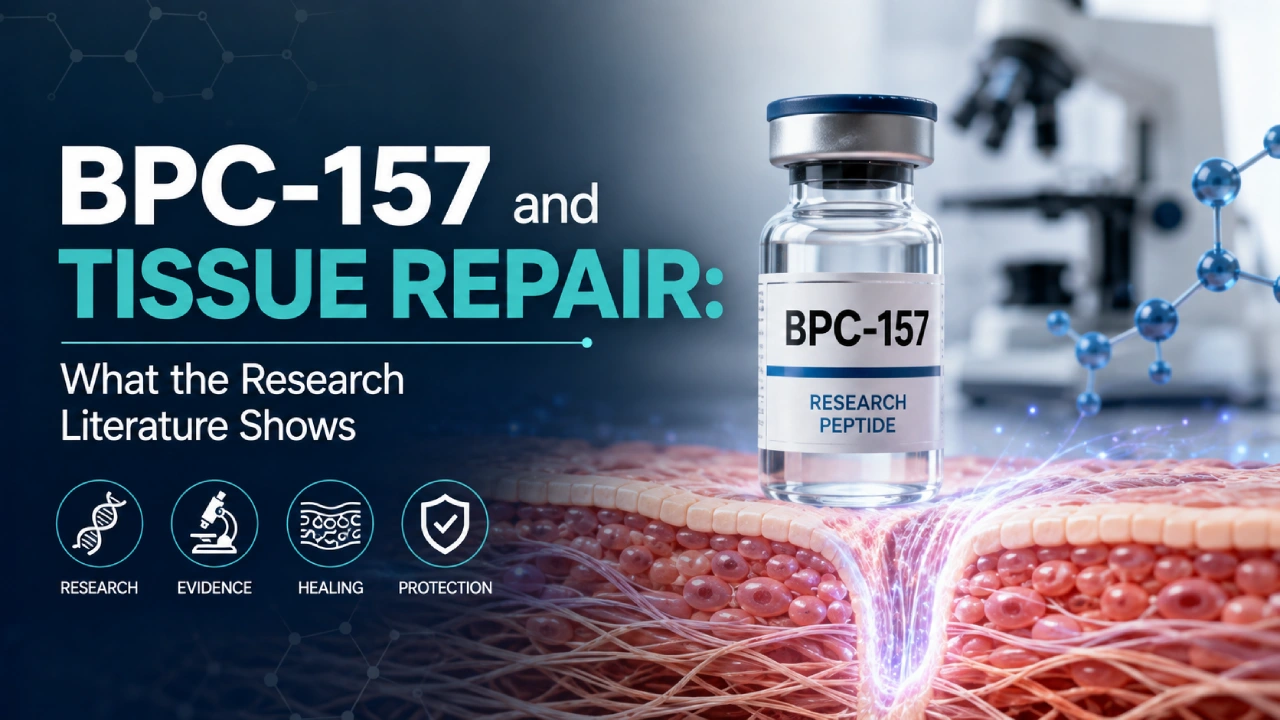
Few compounds have generated as much research interest in the regeneration space as BPC-157. Short for "Body Protection Compound-157," this synthetic peptide is derived from a fragment of a protein found in gastric juice and has become a frequent subject of preclinical tissue repair research peptides studies. This article summarizes what the published research literature has explored regarding BPC-157's mechanisms and research applications, and what researchers should know when sourcing it for a study.
This article is intended for laboratory, institutional, and qualified research audiences. BPC-157 and all compounds referenced are sold strictly for research use only and are not approved for human or animal use, consumption, or clinical application.
BPC-157 is a pentadecapeptide — a short chain of 15 amino acids — synthesized as a stable fragment based on a naturally occurring protective protein. Its relatively small, stable structure has made it a common subject in preclinical models exploring tissue protection and repair pathways, particularly in musculoskeletal and gastrointestinal research contexts.
Preclinical studies on BPC-157 have investigated its role across several research areas, including:
Much of this research remains in the preclinical (animal and in vitro) stage, and mechanisms are still being characterized. Researchers should treat findings as directional rather than conclusive, and should always consult primary, peer-reviewed literature directly rather than secondary summaries when designing a study.
While the full mechanism is still under investigation, published research has proposed several pathways through which BPC-157 may influence tissue repair, including modulation of growth factor expression, effects on nitric oxide signaling, and influence on fibroblast activity relevant to connective tissue healing. These proposed mechanisms are why BPC-157 is frequently studied alongside other injury recovery research peptides, such as TB-500, which is thought to act on related but distinct repair pathways.
Researchers frequently investigate BPC-157 alongside TB-500 because the two compounds are proposed to act through complementary mechanisms — BPC-157 through localized tissue-protective pathways, and TB-500 through actin-regulation and cell migration pathways relevant to wound healing. This is why some suppliers offer pre-formulated research blends, such as a combined BPC-157/TB-500 research blend, for studies examining their combined effects.
As with any research peptide, compound quality directly affects the reliability of study results. Before selecting a source, researchers should confirm:
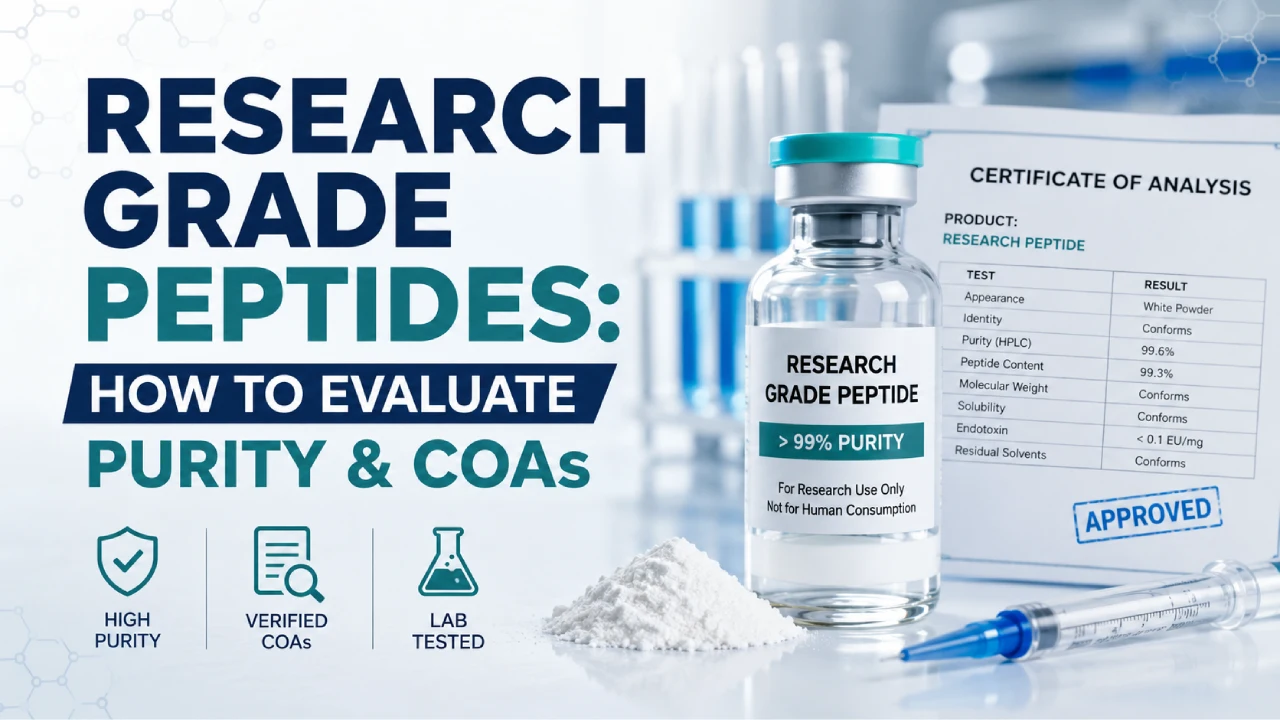
For a deeper look at how to evaluate purity documentation and supplier credibility more broadly, see our guide on research grade peptides and Certificates of Analysis.
Is BPC-157 approved for human use?
No. BPC-157 sold for research purposes is not approved by the FDA or any regulatory body for human or animal use, consumption, or clinical application. It is intended strictly for laboratory and preclinical research.
Why is BPC-157 often paired with TB-500 in research?
The two peptides are proposed to act through different but complementary mechanisms related to tissue repair, which is why some studies investigate their combined effects using blended research formulations.
What form does research-grade BPC-157 typically come in?
It's commonly supplied as a lyophilized (freeze-dried) powder, which researchers reconstitute according to their specific study protocol using appropriate laboratory procedures.
BPC-157 remains one of the most actively studied compounds in tissue repair and regeneration research, with a growing but still-developing body of preclinical literature behind it. As with any research peptide, the value of a study depends heavily on compound purity and documentation — making supplier verification just as important as the research question itself.
Blue Wave Compounds supplies third-party tested BPC-157, TB-500, and combined research blends at 99%+ purity. Learn more about our testing process or browse our full injury recovery research peptide category.